Follow us on LinkedIn

3D Barrier Bags – A Simple Packing Process

Aluminium Barrier Foil can be custom-manufactured as flat or 3D bags, designed to meet your exact packaging requirements. The process below illustrates a typical example of how barrier foil packaging provides complete climatic protection, delivering one single layer of total defence against moisture, oxygen, and environmental impact.

Step


Preparing the Base and Product

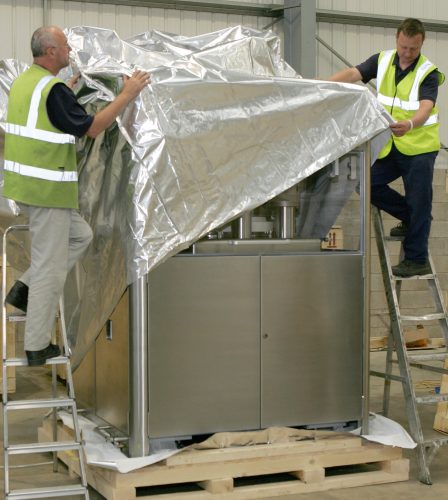
The base sheet of aluminium barrier foil is positioned on the crate base to form the foundation of the protective barrier. 

Desiccant is then added to the packaging to control internal humidity and remove residual moisture. 

The pre-formed 3D barrier bag is carefully placed over the product or machinery, ensuring complete coverage and readiness for sealing.

3D Barrier Bags - Packing Process Step 1

Step

Initial Heat Sealing

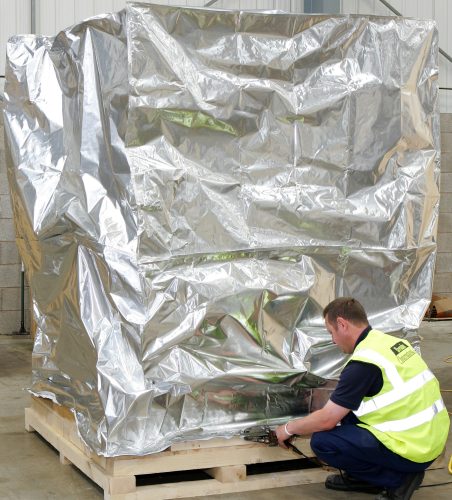
Using a hand-held heat sealer, the bag is securely sealed to the base sheet along the perimeter.

A controlled opening is intentionally left to allow for the removal of internal air.

This precise sealing process ensures a continuous, airtight connection between the bag and base.

3D Barrier Bags - Packing Process Step 2

Step


Vacuum Air Extraction and Final Seal

Before applying the final seal, any remaining air inside the bag is extracted using a vacuum system.

This step removes all trapped air pockets and allows the foil to conform tightly to the product’s contours.

Once the vacuuming is complete, the final seal is made to create a fully hermetic enclosure that maintains maximum protection against moisture, oxygen, and other atmospheric contaminants.

3D Barrier Bags - Packing Process Step 3

Step

Climatic Protection Secured

With the bag fully sealed, the product is now completely protected from all climatic and environmental conditions.

The aluminium barrier foil prevents the ingress of moisture, oxygen and UV light, preserving the product’s condition throughout storage and shipment, regardless of destination or duration.

3D Barrier Bags - Packing Process Step 4

Step

Crating and Final Preparation for Shipment

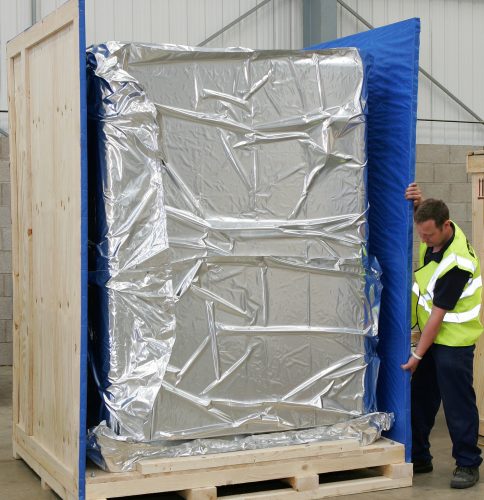
The sealed product is then enclosed within its wooden shipping case, providing robust physical protection during handling and transport.

Combined with the climatic protection of the barrier foil, this ensures the highest level of preservation and safety for valuable equipment in transit.

3D Barrier Bags - Packing Process Step 5

Guidelines for Barrier Foil Packaging

To ensure maximum protection and maintain the integrity of your barrier packaging, always follow these best practice recommendations.

DO

  • Create a secure hermetic seal using an approved hand-held heat sealer to ensure a continuous, airtight closure.

  • Store products and packaged goods in a clean, dry environment to maintain both product condition and outer packaging performance.

  • Consult with our technical team to select the most suitable aluminium barrier foil laminate for your specific product, environment, and shipping conditions.

DON'T

  • Over-extract air when applying a vacuum. Excessive vacuum pressure can stress seals or distort the packaging, reducing overall protection.

  • Use unapproved adhesives or tapes to seal the foil. These materials can compromise the hermetic integrity of the barrier and lead to moisture or oxygen ingress.

  • Re-use barrier foil packaging after its initial use. Once opened, the protective properties of the laminate and seals are no longer guaranteed.

NO LIMITATIONS ON SIZE, SHAPE OR QUANTITY

Protect Your Products with the Industry’s Most Trusted Barrier Packaging Solution

Contact our expert team today for a customised solution tailored to your specific packaging, storage, and transportation needs